

Finders, Keepers (...but not necessarily "finders, *users*"...)
Seven additions to my makerspace that I'm using and four finds that I'm still itching to use

Within the last year I’ve learned a most delightful term, Tsundoku. This Japanese term resonates so much with me as someone who amasses more books, magazines, and other reading materials than I actually read.
I’m not sure if there is a similar term in any language relating to an amassing/using imbalance of arts and crafts supplies and tools. I desperately need this term in my life. I imagine that being able to name my affliction tendency might give me peace, self-acceptance, and a different understanding of my amassing of creativity stuff similar to how me learning the term Tsundoku has helped me re-frame my collecting of books and such.
In the meantime, I have been working more on actually using as much of my “stash” as possible. I’m trying to see the cool stuff that I find for free or that I purchase for pennies (or, especially, that I pay bigger money for) as being just right to use for any projects—even pilot projects. And just right to use now as opposed to being something I need to save for a project that is special enough or for a project only after I’ve reached some mythical level of competence with my making skills.
So join me on a tour of some recent finds that I have managed to use, along with some that I haven’t yet used but would love to.
(And if you know of a term for the relentless collecting of arts and crafts supplies, tools, and equipment without subsequent use of said stuff do please let me know!)
✅ Framing mat samples and scraps
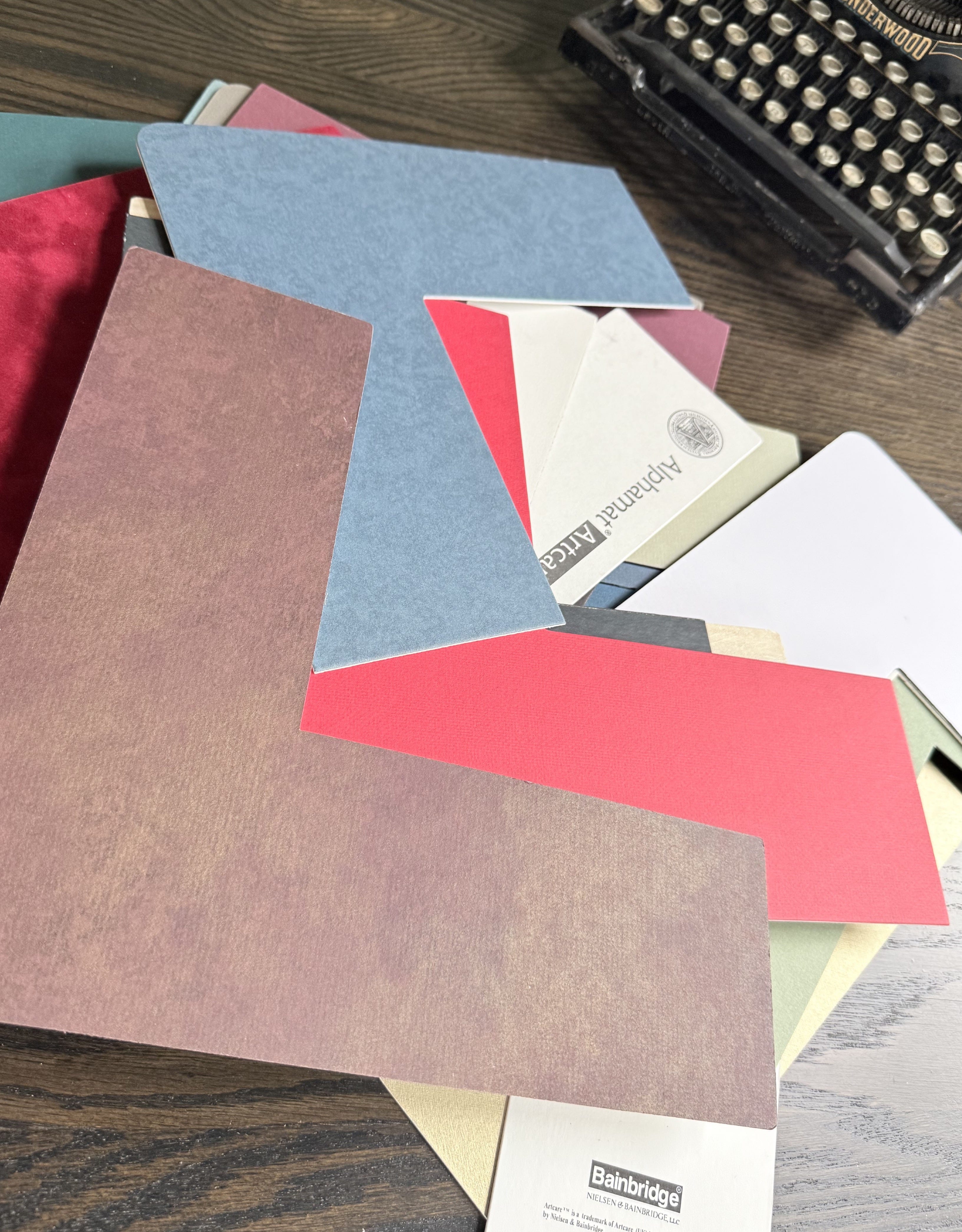
I picked up a couple of shopping bags full of framing mat samples and scraps at my local non-profit materials exchange, recycle and reuse shop FOR FREE during the shop’s moving sale a year or so ago. For the longest I didn't use these mat boards because they’re kind of oddly shaped and not at all big enough for my usual bookbinding projects.
But earlier this year I decided to cut up some of these to practice some no-sew binding methods in a mini-book format, thinking that the boards would be the perfect size for me to cut down to 2.5-by-4-inch book covers. Not only were the boards perfect for practicing, but the mini books came out so well that I’ve now made dozens of these adorable books and given them as gifts to family, friends, and colleagues.
(More info soon on my plans to gift these to Margin\Release financial supporter subscribers!)
✅ Assorted sheets of handmade lokta paper
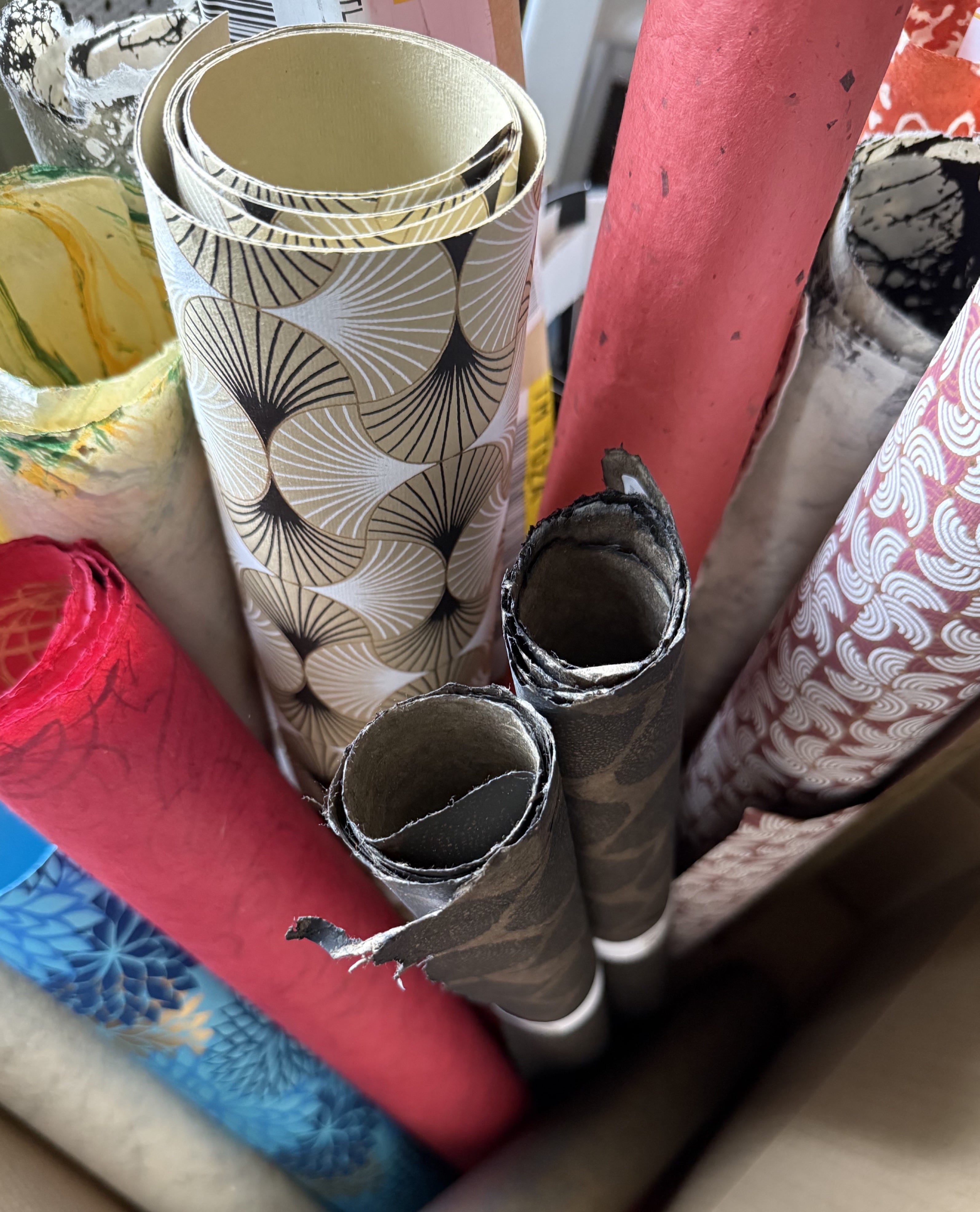
Lokta paper is a luxurious, gorgeous, erotically tactile, eco-friendly handmade paper from Nepal. I source my paper rolls from a local art supply shop that is one of my happy places in town. The paper is not cheap. Hence, I tend to hoard collect these papers and not use them very often.
Once I started my mini-book frenzy, I discovered that the way these papers cut, take glue and wrap boards is perfect for this project. Even better, because the books are so wee, they require less paper and thus it is reasonably economical for me to use this relatively expensive paper.
Originally I vowed to use up all of the paper in my existing stash before buying more rolls. That vow lasted for less than two weeks.
✅ Scrabble letter tiles
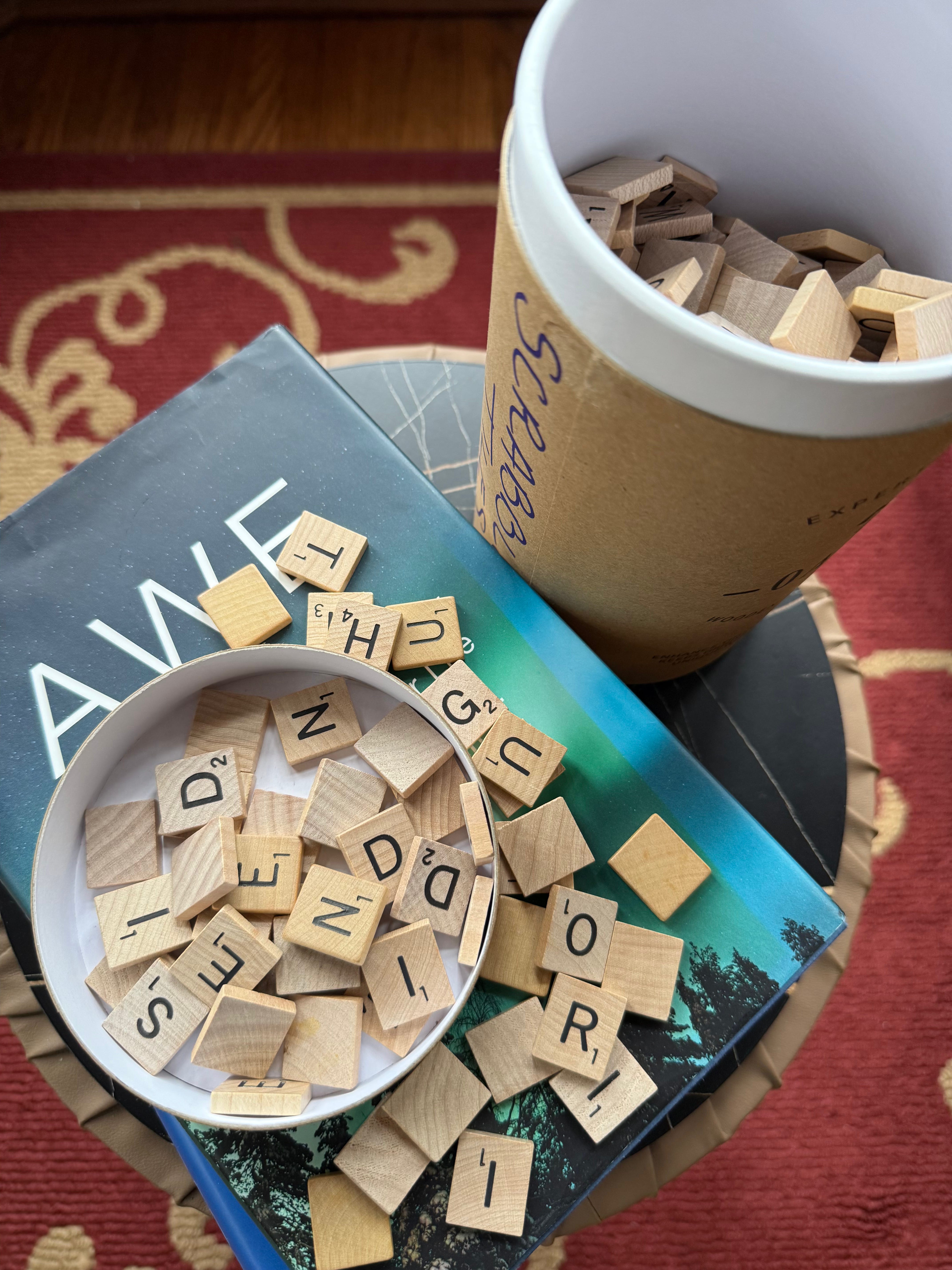
Letter tiles from the Scrabble board game have become a staple for many crafters and have all sorts of uses from signage to jewelry. I source mine from multiple antique malls and thrift stores, and from the non-profit re-use store I mentioned earlier. I’ve paid as little as nothing for a bag of letters. The most I’ve ever paid is $12 for a complete set.
I’ve been using these in my mini-book project as monograms that I put on the front cover. They’re the perfect scale for the books, easy to affix, and are relatively lightweight.
✅ Sankofa charms
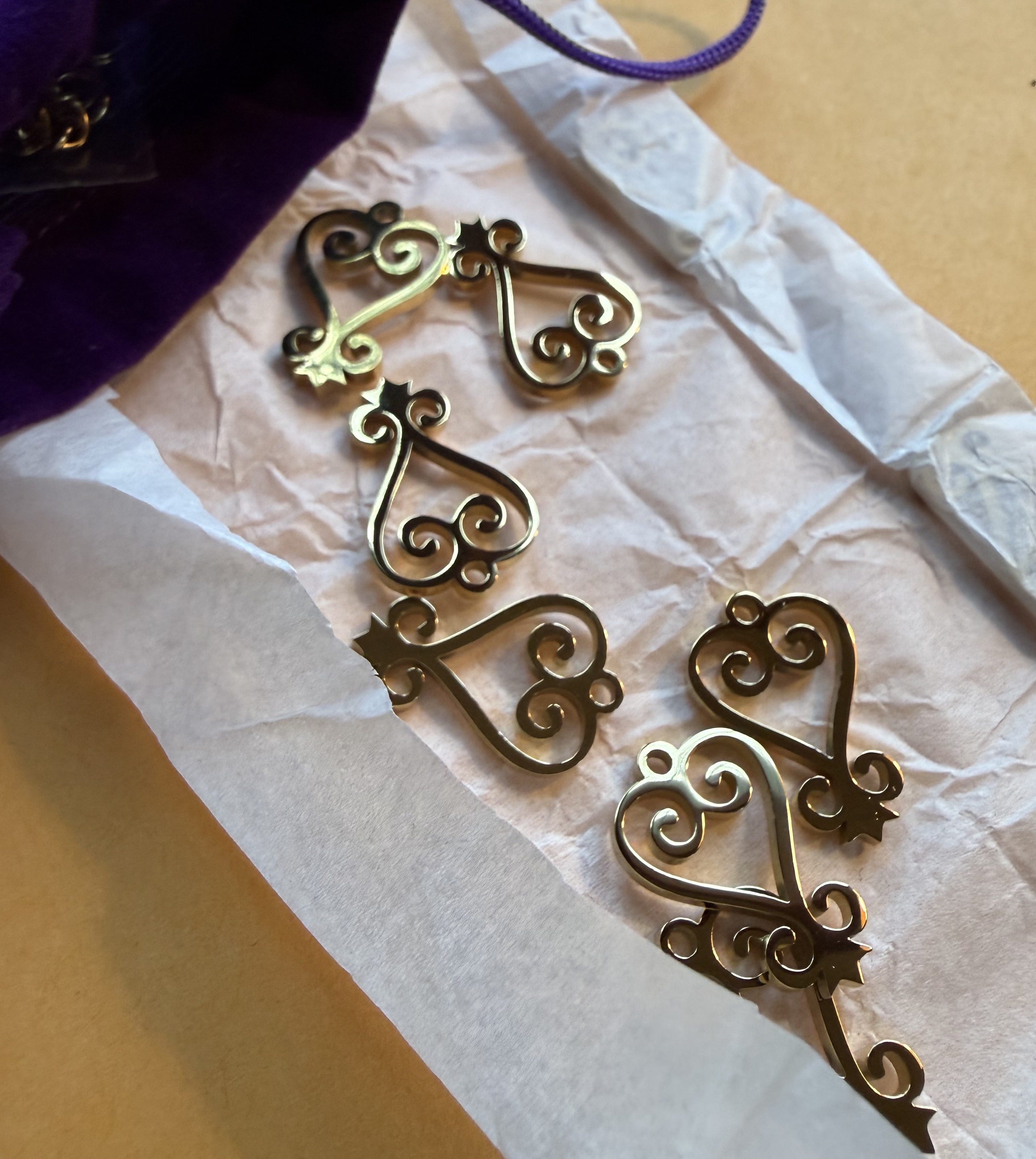
As much as possible I try to source my arts and crafts supplies and materials from local shops, Black and women owned shops/vendors, and arts-related non-profits. I found a couple of Etsy shop owners fitting this goal who sell these charms that are perfect for one of my mini-book projects.
This is one of the Adinkran symbols for sankofa, an Akan word (Ghana) meaning go back and get it that most often is used to communicate the wisdom of learning from the past. (You may be more familiar with the version of this concept that depicts a bird moving forward with its head turned back with a small egg in its mouth or on its back.)
I wanted to use some African-inspired print fabric that I had been saving in my stash since last summer for a third series of my mini-book project, which I called “sankofa.”
Adding dangly beads, charms, ribbons, lace, and other embellishments to books is a frequent practice in “junk journal” making. Even though my mini books are not really what I’d characterize as junk journals, I still wanted to give these adorable babies some jewelry to wear and these charms were perfect for that.
✅ Rotatrim Monorail 26 3/4-in. rotary cutter


This is my current pride and joy.
If you ever come to my house, I will take you to my back patio makerspace and show you this professional, large format rotary paper trimmer. I will pull out the box from under my work table to prove to you that I paid TEN DOLLARS for it—a model that is no longer available from the manufacturer and that you’d have to buy from third party sellers for over $250 for the unit (and $85 for a replacement blade). I will encourage you to note how sharp the current blade is, despite me getting this previously owned from my local non-profit recycle/re-use shop. I may pull out one of my large precious sheets of lokta paper to demonstrate to you how beautifully, how precisely, how smoothly the rotary mechanism moves to slice through the paper. I may force encourage you to make a slice so that you can experience first-hand the cutting joy.
I will do all of this even as I know I risk that you’ll then never ever ever want to visit me again.
✅ Cast iron sad iron
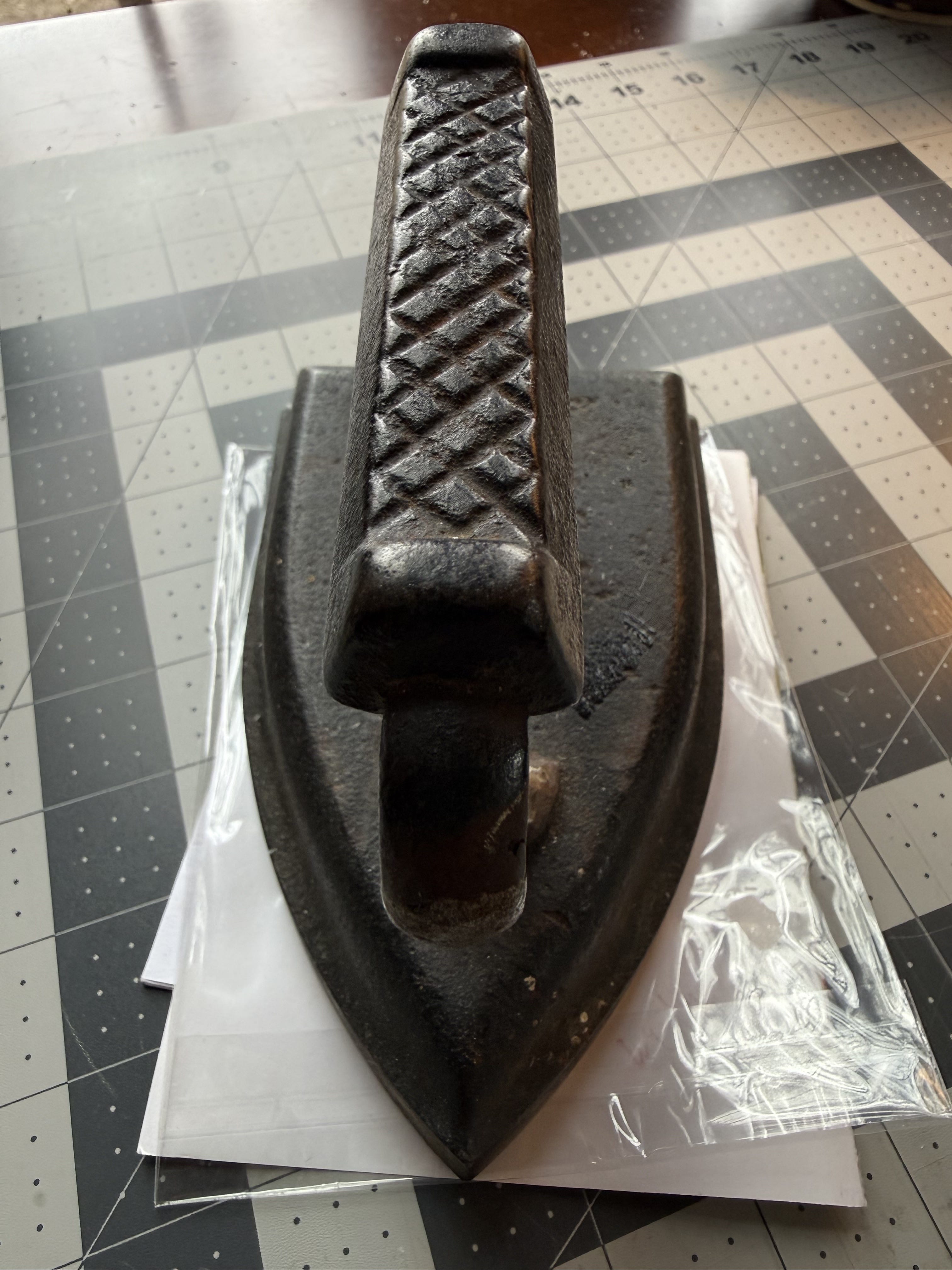
Sad irons (named for the Middle English sad meaning solid or heavy) are frequent finds in antique malls. For months I had been looking for one that I could use as a weight.
In bookbinding, you put stuff under heavy weights to help material that you’ve glued dry without warping and to set the folds of papers such as those you’d bind inside of a book. I have all sorts of things I use for weights—chonky hardback books, cinder blocks, marble bases of trophies. I wanted to add to this tool collection a cast iron sad iron because of its high weight in such a compact, portable package.
I looked for a long time for an iron that was priced reasonably while also being in good condition: smooth, completely flat bottom…rust-free…solidly attached handle…and just pretty.
I’ve used this iron, bought from one of my favorite antique malls for $12, for every mini-book I’ve made. Besides it being functionally perfect, I enjoy using something in my making that has a backstory and history. I love to imagine the homes that this iron was used in…the stove tops it was heated on…the hands that clutched its handle…the dresses and shirts and other clothes that it freed from wrinkles...
Sure, I could buy something new that would do what I need it to do. But something new wouldn’t produce the same delight for me as using this appliance from the 1800s.
✅ Glass salt pinch bowls
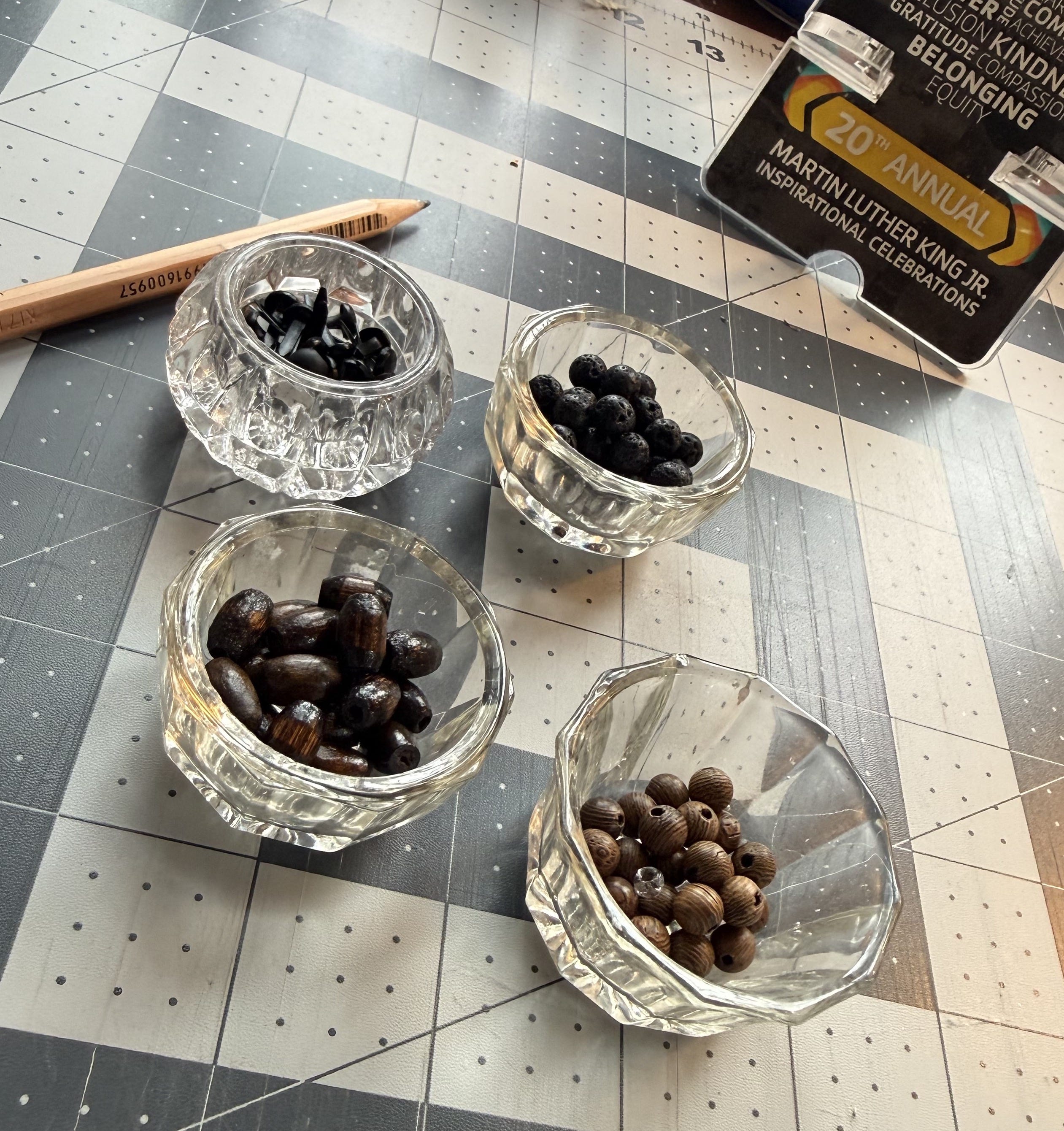
Along the same lines of using functional things with a history are these salt pinch bowls that I use to store small things like beads and brads while I’m actively working on a project. These cost me $1 apiece from an antique mall. I could have gotten a whole set of 10 or 12 brand new ones for a dollar or even less than a dollar each.
But again, using stuff that other hands have used brings me such joy. It’s as if generations of people are sitting beside me as I create, cheering me on.
❌ Package of Give-a-Show slides
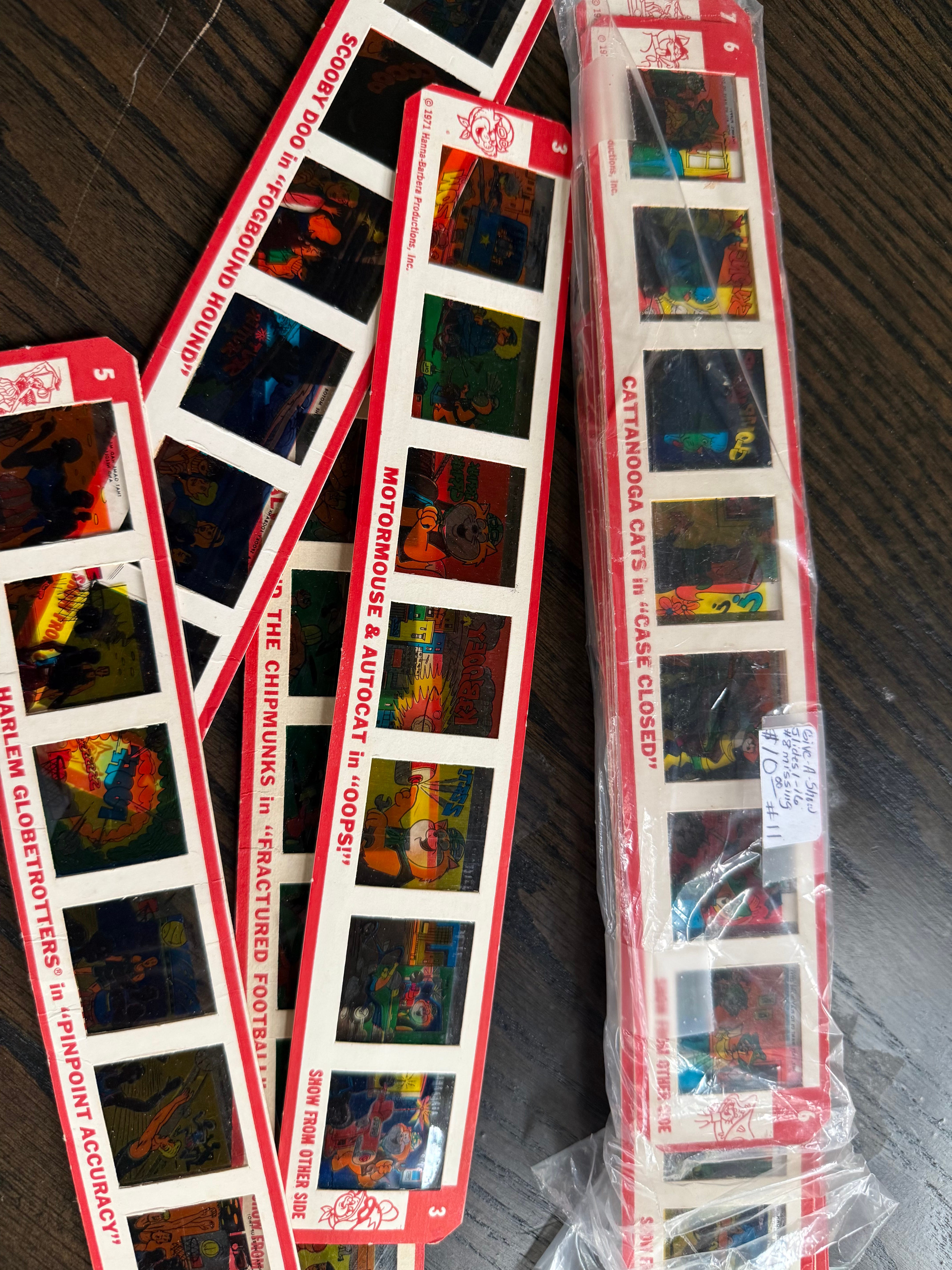
Every once in a while you see something at an antique mall that you know you’re unlikely to see ever again. When that happens to me I have a two-step strategy I employ, both done before I look at the price. Step 1: I search my memory to see if I’ve ever seen the thing before in all of my trips to antique malls, thrift stores, and other places. Step 2: I ask myself “What is the most you would be willing to spend on this unique find, even if you have no idea what you might use it for right now?” If I determine the thing is truly rare and the price I came up with is higher than the price the thing actually is, I usually buy it.
Sometimes, if my price is lower than the actual price, I still buy it.
(I guess this is not so much a two-step strategy as two things I like to think about before doing whatever I want to do.)
Anyway, I absolutely love these film strips. They spark such pleasant nostalgia for me. The stories on the film strips are from so many of my favorite childhood cartoons like “Josie and the Pussy Cats,” “Bugs Bunny,” and “Scooby Doo.”
I never had a Kenner Give-a-Show projector. But I was a bougie little kid who would have loved to invite friends over, serve some tea and small sandwiches, dim the lights, and project onto my wall a film strip about the time Alexandra fired a love spell that accidentally hit a old man driving a steam roller instead of hot Alan who, of course, had been flirting with Josie.
I want to use these strips in such a way that takes advantage of their transparency. It would be super cool if I could retain the actual filmstrip nature in my project. Right now I’m thinking of a zine, with each zine containing an actual strip or section of a strip.
I’m sure I’ll figure out something eventually but so far I haven’t done anything with these.
OR,
…I could buy a Kenner Give-a-Show projector on Ebay and we can watch the film strips when you come over to play with my rotary paper trimmer!
❌ Assorted keys and padlocks
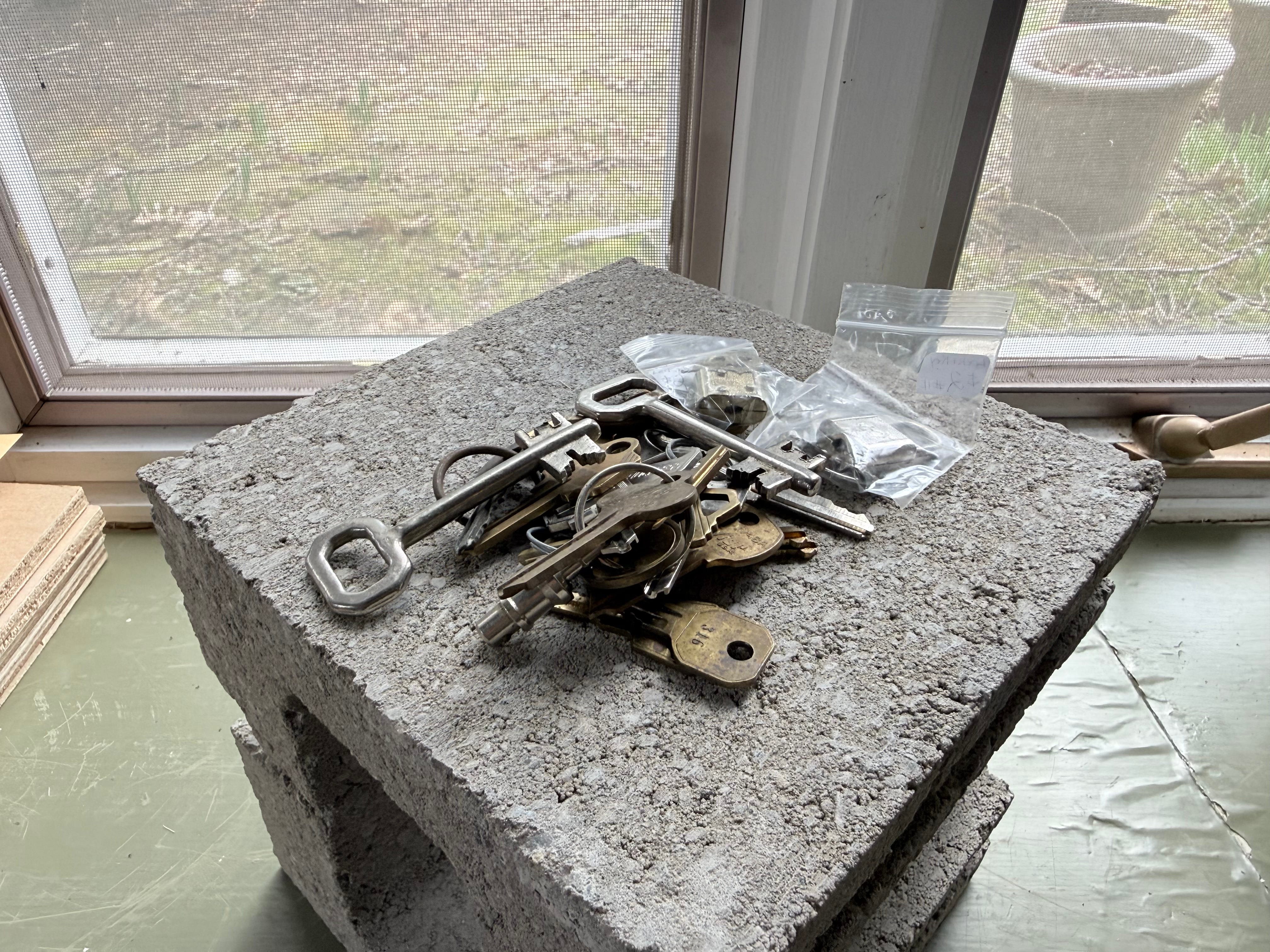
I have a whole bag of these, also procured for free during the moving sale at the non-profit materials exchange store I mentioned earlier. I’ll use these eventually. Keys are a wonderful, if overused, metaphor that I frequently use in my making projects. In fact, one of the mini-book series I’ve been working on is called “in the key of life.” It has a music theme and I used little reproduction metal keys as part of the “jewelry” for the books. Most of these pictured keys in my stash are full sized, however, so would not be the right scale for my mini-book project.
Old keys are fascinating to me, though. Talk about the history contained in these artifacts!
❌ Assorted leather and metal watch bands
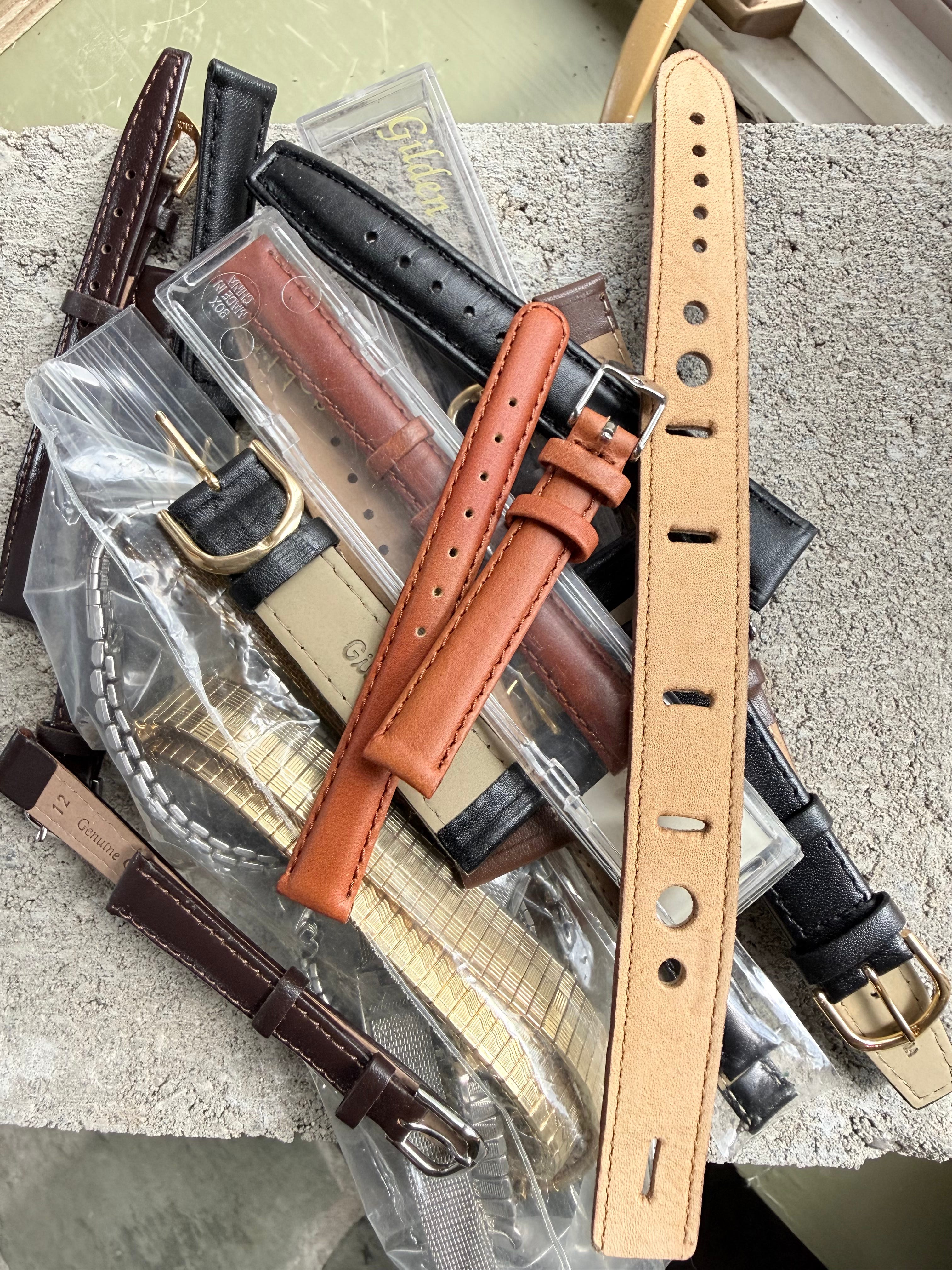
Yet another huge bag of stuff I got in my free haul from the moving sale. Most of these are brand new. That’s the thing about many materials exchange stores that I’ve seen in different cities: though most of the stuff there will be previously used, often individuals, companies, and organizations will donate brand new materials, often in their original packaging.
The first thought that came to my mind when I first saw these watch bands is that I could use hem to make book/journal closures. Some are the right scale that I could use in my mini-books, but I’m thinking many of the bands would be too large.
Oh, I forgot—I also have a bag of watch faces I got at the same time!
Again, I’ll eventually think of some use for these.
❌ Player piano rolls
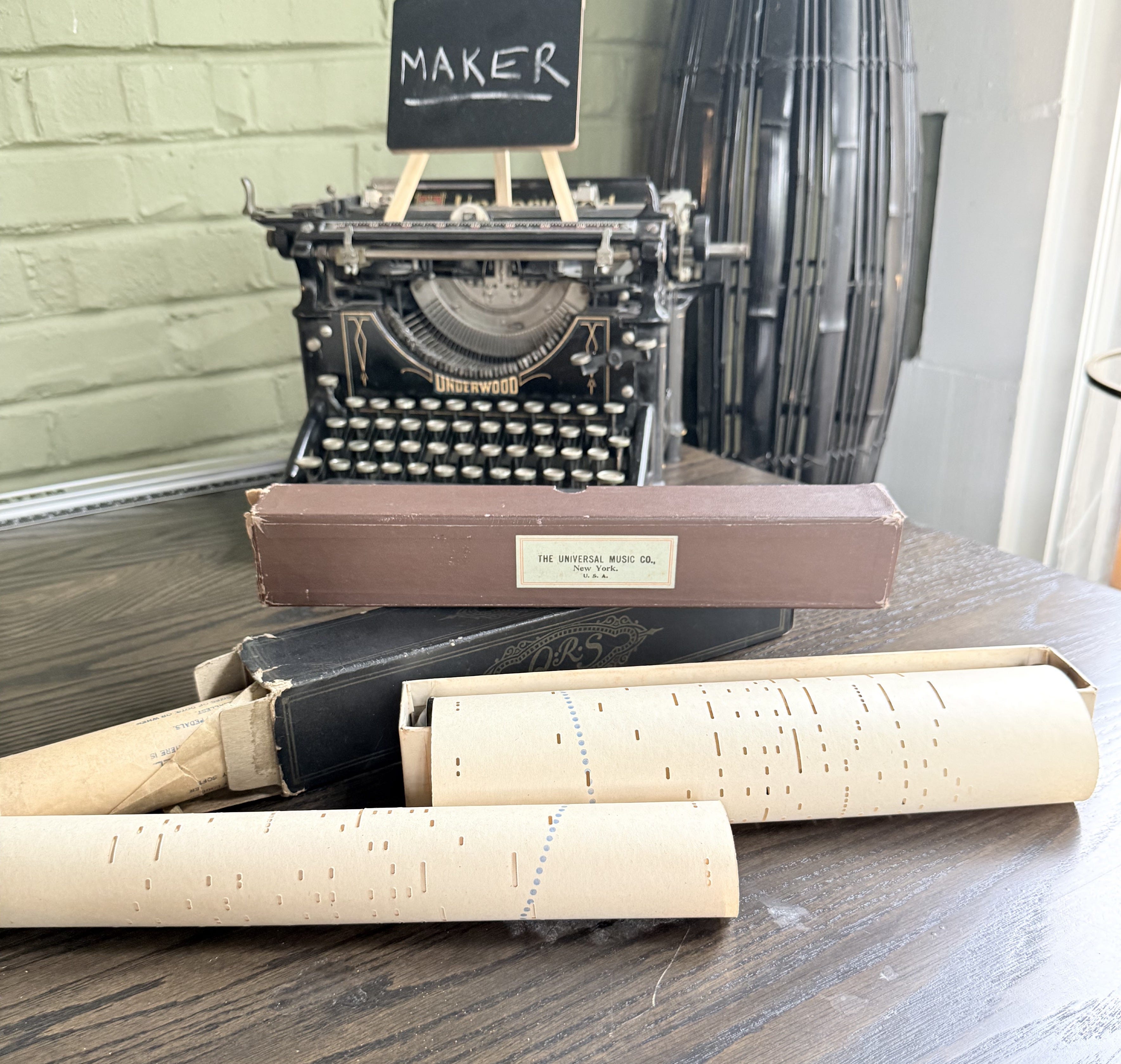
I’m always drawn to vintage paper when I’m on an antiquing/thrifting jaunt. Player piano rolls are surprisingly common in antique malls. I usually pass them by, but one time I decided what the heck and bought some.
I have so many ideas for uses for this paper. Some ideas are pretty basic, like cut the paper into pieces to use for book covers or collage material. But I also have some more fanciful ideas, including some that would maintain, to some extent, the ideas (if not the actual function) of this paper’s originally intended use.
By year’s end I will have made something beyond a prototype with this paper. You mark my words.
Of course, by that time I will have amassed new stuff with no apparent use on the horizon.
I really really need that Tsundoku-ish word…
I would love to shadow you while you shop!